

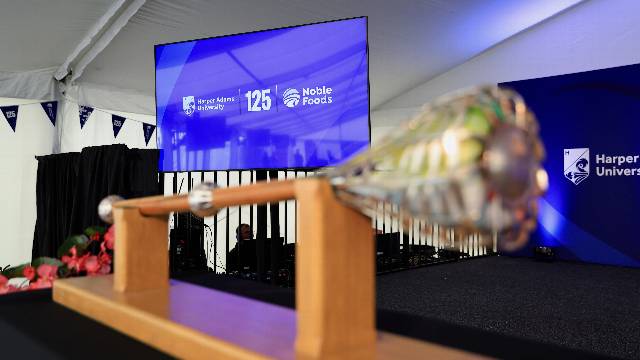
 Looking back at a remarkable 125th anniversary celebration
Ian Rowley is Harper Adams University's Executive Director for Institutional Impact and Engagement – and had a front-line seat as prep …
Posted 1 October
Looking back at a remarkable 125th anniversary celebration
Ian Rowley is Harper Adams University's Executive Director for Institutional Impact and Engagement – and had a front-line seat as prep …
Posted 1 October
Exploring environmentally friendly ways of protecting Daffodils (Narcissus) from pests and increasing their yields.
1 March 2022

From Zimbabwe to Harper Adams via Belgium, Vongai Chekanai is now six months into her PhD research and is on a mission to deduce which cover crops are the best at protecting Daffodils from Nematodes.
Vongai completed her undergraduate and postgraduate programmes at the University of Zimbabwe and the University of Ghent, and all that knowledge is now being cultivated here at Harper Adams.
“I was excited to get started because for Applied Nematology, the researchers here at Harper Adams are world leaders…you cannot talk about Applied Nematology without talking about Harper’s Nematology team.
“Daffodils are susceptible to plant-parasitic nematodes and because of the ban on the use of pesticides Narcissus yields are starting to be effected.
“So, my PhD research is specifically concerned with trying to come up with an environmentally friendly way of reducing nematodes and increasing the yield of Daffodils across the sector, and one such way is the use of cover crops,” explains Vongai.
Vongai is preparing for her first set of field trials, which are scheduled to take place from June to October and will be using a range of bio-fumigant cover crops including brassicas and brown mustard, chicory, French marigolds and legumes.
“As part of the preparatory work I will do bioassays in the Harper Adams laboratories before I get into the field.
“It’s a matter of doing the experiment in a controlled environment and finding out which crop performs the best.
“We then grow the cover crop, check the nematode suppressiveness potential and follow that up with the daffodils and then we compare the differences between the field results and the controlled study.”
Vongai comes from a family of subsistence farmers in Masvingo, Zimbabwe and she has been set on studying agricultural science from the age of 17.
“Agriculture as a science is fun and you can get everything you are looking for from it…if you like travelling you can travel to different conferences, if you like plants you can focus on plant sciences, if you like insects you do entomology.
“Doing a PhD, it’s not about how smart you are, it’s about liking the work that you are doing and wanting to acquire deeper knowledge, a PhD is just a further deepening of your knowledge.
“I think there is so much space for women in science, We should try and encourage each other and the younger generations to get involved in Science and Technology.”

Related Posts
Looking back at a remarkable 125th anniversary celebration
Ian Rowley is Harper Adams University's Executive Director for Institutional Impact and Engagement – and had a front-line seat as prep …
Posted 1 October
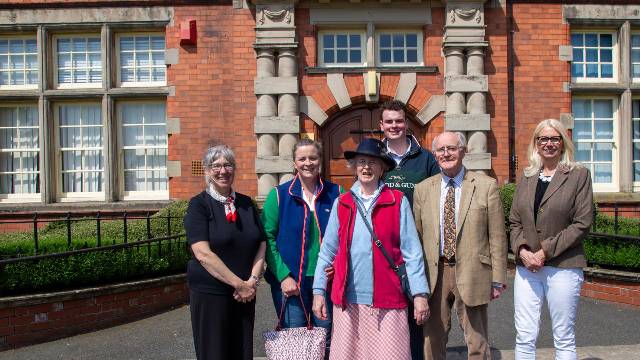 Iconic dog trainer Barbara Woodhouse's legacy lives on at Harper Adams through her great-grandson
For many, Barbara Woodhouse has been a household name over the years for her approach to training our beloved four-legged friends.The …
Posted 30 September
Iconic dog trainer Barbara Woodhouse's legacy lives on at Harper Adams through her great-grandson
For many, Barbara Woodhouse has been a household name over the years for her approach to training our beloved four-legged friends.The …
Posted 30 September
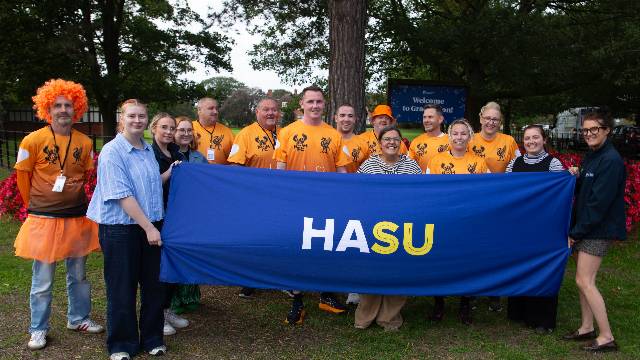 University welcomes awareness-raising meningitis B run
A runner who undertook a 100-mile challenge between two football stadiums to raise awareness of meningitis B has completed his trip.Sha …
Posted 22 September
University welcomes awareness-raising meningitis B run
A runner who undertook a 100-mile challenge between two football stadiums to raise awareness of meningitis B has completed his trip.Sha …
Posted 22 September
 Student Choice Awards 2026 celebrate the best in learning and teaching support
An annual awards ceremony to celebrate excellent learning and teaching support has been held at Harper Adams University.The awards are shape …
Posted 9 September
Student Choice Awards 2026 celebrate the best in learning and teaching support
An annual awards ceremony to celebrate excellent learning and teaching support has been held at Harper Adams University.The awards are shape …
Posted 9 September